


- Facial Contouring Surgery/ Double Jaw Surgery
- Lifting & Wrinkle Surgery
- breast surgery
- Body contouring
- Male plastic surgery
- Eye plastic surgery
- Rhinoplasty
- Trauma Center
- Woori Plastic Surgery Beauty Clinic
- Woori Plastic Surgery Clinic
- Surgery Reviews
- Consultation/Reservation
- Events
- Procedure Information


 Scar Revision Surgery
Long-standing scars,
made less noticeable.
#Scars from accidents and surgery
#Burn, self-harm, and post-cosmetic-surgery scars
Scar Revision
We don't erase scars.
We make them smaller and less noticeable.
Scar revision is more than cutting a scar out. It takes a plan tailored to your skin.
We assess the scar's size, width, depth, direction, and the surrounding skin to create a more natural, less visible result.
-

Scar Causes
Trauma, surgery, burns & more -

Scar Shape Analysis
Width, direction, and depth -

Post-Surgery Scar Care
Support through recovery and beyond
What Kind of Scar Do You Have?
Scars look and feel different depending on how they formed.
※ Keloid and hypertrophic scars may need non-surgical treatment, alone or alongside surgery, depending on the condition.
-
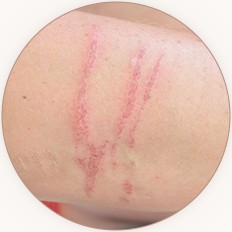
Trauma Scars
Scars from accidents
Falls, lacerations, car accidents,
and other injuries -
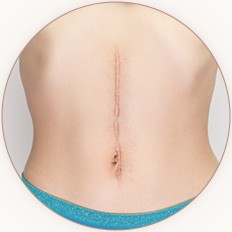
Surgical Scars
Scars left after surgery
C-section, thyroid, abdominal surgery,
and other incisions -
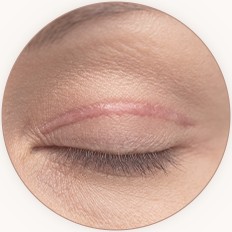
Cosmetic Surgery Scars
Scars from aesthetic procedures
Eyelid, nose, breast, facelift,
and other incision sites -
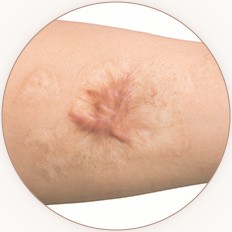
Burn Scars
Scars from burns
Changes in color, texture, and tightness
depending on burn depth -
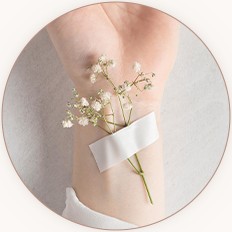
Self-Harm Scars
Repeated linear scars
Multiple line-shaped scars
on the arms, wrists, and elsewhere -
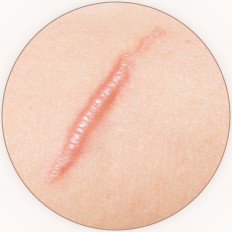
Keloid & Hypertrophic Scars
Thick, raised scars
Excess scar tissue that formed
during healing


Shape Of Scar
Even scars from the same cause look different.
What matters as much as the cause is how the scar looks now.
We look at both how it formed and what it looks like today.
Wide scars where the wound spread apart
Depressed scars that sit below the surrounding skin
Raised scars thicker than the surrounding skin
Contracted scars that pull on the surrounding skin
Scars with an uneven surface or direction
Long scars that run against natural skin lines

We look beyond the scar itself,
to how it blends with
the surrounding skin.
Simply cutting out a scar doesn't always give the best result.
We consider the scar's location and direction, skin thickness,
and the tension and laxity of the surrounding skin.
At WOORI Plastic Surgery, we plan each surgery to leave
a scar that's less prominent and blends naturally with the surrounding skin.

When Is Scar Revision
Right for You?
- The scar has widened
- The scar sits deeper than the surrounding skin
- A long, straight scar is easy to notice
- The scar runs against natural skin lines or creases
- The scar pulls and distorts the surrounding skin
- An irregular scar remains after past surgery or suturing
Scar Revision Methods
Different scars call for different techniques.
-
Simple Excision
Removes the existing scar tissue and carefully
re-sutures the surrounding skin to narrow the scar.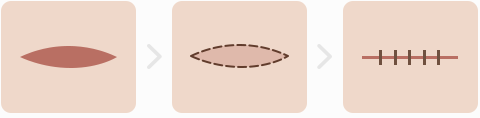
- Best for
- Linear scars, widened scars, surgical scars
-
Serial Excision
For scars too large to remove at once,
the scar is reduced gradually over several procedures,
with set intervals in between.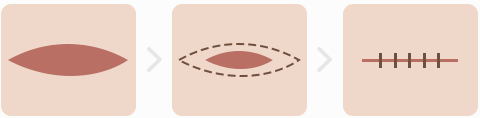
- Best for
- Large scars, scars with limited skin laxity
-
Z-Plasty
Repositions the skin in a "Z" pattern
to change the scar's direction and release skin tension.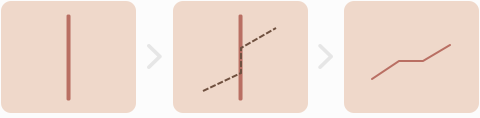
- Best for
- Contracture scars, pulling scars,
scars that need redirection
-
W-Plasty
Breaks up a long, straight scar
into multiple directions so it's less visible.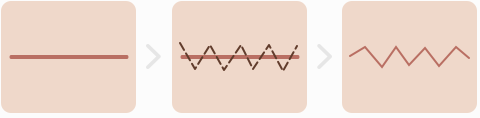
- Best for
- Long, straight scars; linear scars on the face
※ The actual surgical method may vary depending on the scar's location, size, and the condition of the surrounding skin.
WOORI Scar Reduction System
From your first consultation
to post-surgery care.
-

Scar Cause &
Condition AssessmentWe review when and how
the scar formed, plus its size,
depth, and direction. -

Surrounding Skin &
Tissue AnalysisWe assess skin laxity, tension,
and the tissue around the scar. -

Surgical Planning
We plan the right approach:
excision, serial excision,
Z/W-plasty, and more. -

Scar Excision & Re-Suturing
We refine the scar tissue
and re-suture with the surrounding skin
and tissue in mind. -

Post-Surgery Scar Care
We monitor your recovery and,
if needed, follow up
with scar laser treatment.


When is the best time
for scar surgery?
A fresh scar changes over time.
Redness, firmness, and shape all shift as it matures.
We review when the scar formed, its current condition,
location, and cause, then decide the right time to treat.
An older scar isn't too late to treat.
Start with an assessment of your scar's current condition.
Surgery Or Laser?
Which treatment is right for your scar?
-
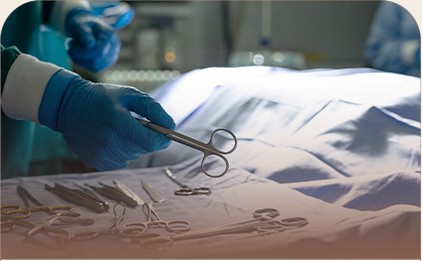
Scar Revision Surgery
Improves the shape and structure of the scar.
Recommended for
Widened scars, depressed scars,
pulling scars, poorly aligned scars,
structurally noticeable scars -
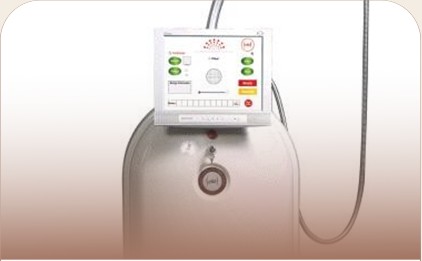
Scar Laser

Improves scar color and skin texture.
Recommended for
Red scars, hyperpigmentation,
uneven skin texture, post-surgery scar care

From Wound To Scar
From the moment of injury
to long after the scar has formed.
Healing doesn't mean treatment is over.
WOORI Plastic Surgery's Wound & Scar Center
treats it all as one continuous process,
from wound closure right after injury to the scar left after recovery.
Why WOORI Scar Reduction
Why WOORI Scar Reduction
-
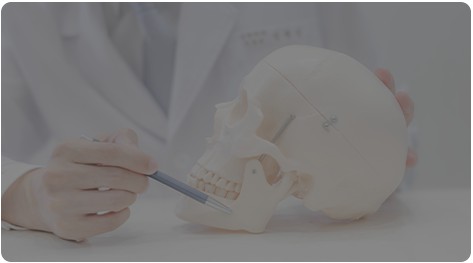
Cause-Based Analysis
We start by identifying the cause:
trauma, burn, or surgery. -

Shape-Based Planning
We consider width, depth, and direction,
plus the tension of the surrounding skin. -

Multiple Surgical Options
No one-size-fits-all.
We plan the surgery your scar
actually needs. -
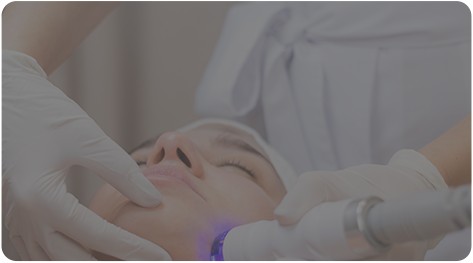
Laser Follow-Up Care
If redness or texture remains after surgery,
scar laser can be added as needed. -
Plastic Surgical Closure
We refine the scar tissue, then re-suture it
to blend with the surrounding skin. -
One Center, Wound to Scar
Wound closure, scar revision surgery,
and scar laser, all in one center.